 ultimate-guide
Best Influencer Marketing Strategy: 2026 Guide
Table of Contents
- What Makes an Effective Influencer Marketing Strategy
- Core Strategic Approaches to Influencer Marketing
- Influencer Marketing Campaign Examples That Drive Results
- Crafting Influencer Outreach Email Templates
- How to Measure Influencer Marketing ROI
- Best Influencer Marketing Tools for Brands
- Common Mistakes That Undermine Influencer Campaigns
- Implementing Your Strategy: A Practical Roadmap
- Frequently Asked Questions
Last Updated: 4 September 2026
What Makes an Effective Influencer Marketing Strategy
An influencer marketing strategy is a documented plan for partnering with content creators to promote your brand, products, or services to their engaged audiences. The best strategy for influencer marketing in 2026 combines clear campaign objectives, rigorous creator vetting, and performance measurement.
At DG Digital Marketing, we have structured campaigns for clients, and the consistent lesson is that strategy determines success more than budget size.
The common assumption is that a large budget guarantees results. In practice, the brands that win are those that define what success looks like before they contact a single creator. They decide whether the goal is awareness, engagement, or direct sales, and they build every subsequent decision around that answer.
A common mistake is treating influencer marketing as a quick content swap rather than a channel with its own economics. Effective strategies share three foundations: audience alignment, authentic creative briefs, and a feedback loop that captures performance data for the next campaign cycle.
Core Strategic Approaches to Influencer Marketing
Three strategic models dominate current practice, and each suits different brand objectives. Your choice should reflect your product category, your margin structure, and whether you need scale or depth.
Macro-Influencer Campaigns: Reach vs. Authenticity
Macro-influencers, typically those with hundreds of thousands of followers, deliver mass awareness quickly. They suit product launches, brand repositioning, and campaigns targeting broad demographics.
The trade-off is authenticity. Audiences increasingly treat large creators as media channels rather than trusted peers, which can dilute the credibility of your message. Production costs are also higher, and a single poorly received post can generate disproportionate negative attention.
Micro-Influencer Partnerships: Engagement and Niche Authority
Micro-influencers, generally between 10,000 and 100,000 followers, offer higher engagement rates and stronger audience trust within specific niches (peer-reviewed research). For beauty and fashion brands, these partnerships often outperform macro campaigns on a cost-per-engagement basis.
The limitation is reach. You need more creators and more coordination to achieve the same raw impressions, which increases management complexity across your workflow.
Hybrid Approaches: Combining Scale with Authenticity
A hybrid strategy deploys a few macro creators for awareness while running a larger bench of micro partners for credibility and conversion. This is the approach we recommend for most mid-market consumer brands, because it balances reach with the authentic voice that drives purchase decisions.
Strategy | Best For | Key Strength | Main Drawback |
|---|---|---|---|
Macro-Influencer | Product launches, mass awareness | Broad reach quickly | Lower engagement, higher cost |
Micro-Influencer | Niche authority, conversion | High trust, strong engagement | Limited scale, more coordination |
Hybrid | Balanced growth | Scale plus authenticity | Complex management |
Influencer Marketing Campaign Examples That Drive Results
Strong influencer marketing campaign examples share a common thread: they give creators genuine creative freedom within a clear brand framework. Campaigns that script every line tend to feel like advertisements and underperform.
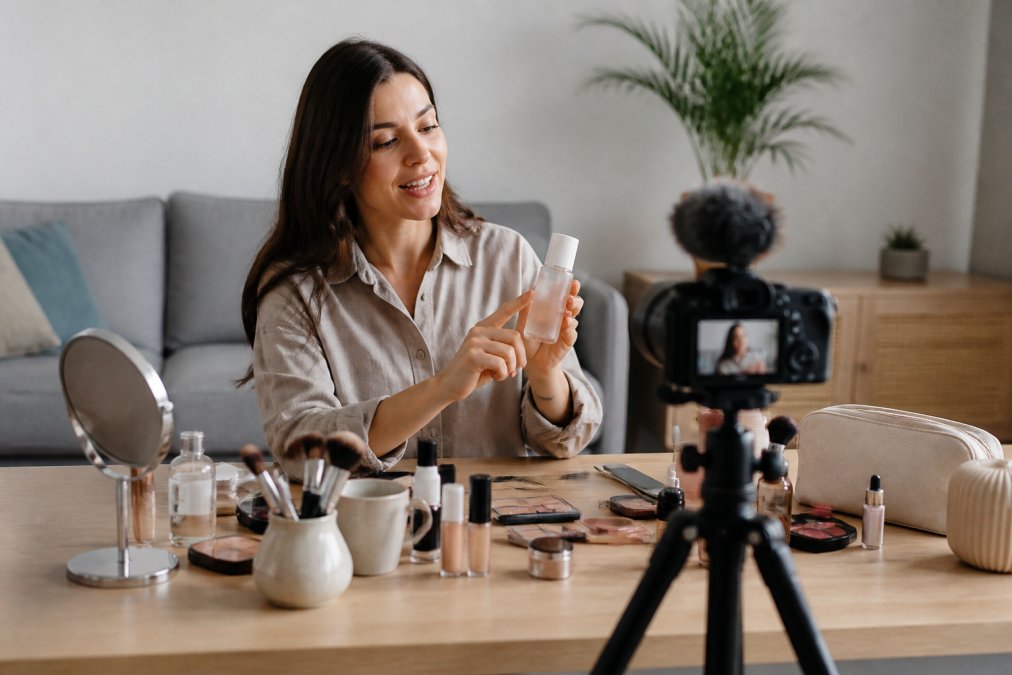
A useful model is the "always-on" campaign, where a brand maintains a rotating roster of micro-influencers who feature products in their regular content. This builds cumulative trust rather than relying on a single viral moment. For fashion and beauty brands, unboxing and tutorial formats consistently deliver strong engagement because they demonstrate product use in an authentic context.
The brands we have worked with, including Neo Derm, have found that campaign performance improves when creators are briefed on the product's benefits and the audience they must reach, then left to interpret the message in their own style.
Crafting Influencer Outreach Email Templates
Your outreach email determines whether creators even open your proposal. The best influencer outreach email templates are concise, personalised, and transparent about expectations.
A structure that works well includes a specific compliment referencing the creator's recent content, a one-line description of your brand and campaign, the commercial terms, and a clear call to action. Avoid generic greetings and mass-mail phrasing, which creators recognise immediately.
Keep the email under 150 words. Creators review pitches on mobile, and a wall of text will be deleted. If you manage multiple campaigns, a centralised system for tracking pitch links and responses prevents the confusion that arises when outreach is scattered across spreadsheets and email threads.
How to Measure Influencer Marketing ROI
Measuring influencer marketing ROI requires tracking performance against the objectives you set at the start. For awareness campaigns, focus on reach, impressions, and share of voice. For engagement campaigns, track likes, comments, saves, and shares. For sales campaigns, use unique discount codes and trackable links.
A practical approach is to assign a value to each engagement tier. A save or a share signals stronger intent than a like, so weighting these actions in your reporting gives a truer picture of campaign health than raw metrics alone.
The challenge for many marketing teams is consolidating data from multiple creators into a single view. When campaign data lives in different tools, calculating return becomes a manual exercise prone to error. Teams that centralise their creator data, including pitch links and performance metrics, can report results accurately and justify budget for future campaigns.
Best Influencer Marketing Tools for Brands
The best influencer marketing tools for brands address the operational burden of running campaigns at scale. A boutique agency approach, such as the one DG Digital Marketing provides, offers a centralised platform for organising, tracking, and sharing your creator work.
For teams managing campaigns across multiple clients, the ability to track pitch links, monitor responses, and store campaign history in one place eliminates the inefficiency of scattered records. This matters whether you are a solo entrepreneur or a marketing coordinator handling several brand portfolios.
What most guides miss is that tooling alone does not improve results. The discipline of consistent tracking and documentation is what enables better decisions. Agencies that manage large creator rosters rely on structured workflows to ensure no partnership falls through the cracks.
Common Mistakes That Undermine Influencer Campaigns
The most damaging mistake is skipping audience verification. Brands have been burned by creators with inflated follower counts, and the UK Advertising Standards Authority guidance on influencer marketing requires marketers to ensure claims about engagement are honest. Fake followers distort performance data and waste budget.
Another frequent error is prioritising follower count over audience fit. A creator with 50,000 followers in your niche will outperform one with 500,000 followers who rarely posts about your category. The relevance of the audience matters more than its size.
Under-investing in the creative brief also undermines results. Creators need context about your product, your brand voice, and the campaign goal to produce content that resonates. Vague briefs produce vague content.
Implementing Your Strategy: A Practical Roadmap
Start with a pilot campaign involving five to ten micro-influencers in your niche. Define your primary metric, whether that is engagement rate, website clicks, or conversions, and set a baseline for comparison.

From there, the implementation sequence follows a consistent pattern:
- Define objectives and select the metric that will determine success.
- Identify and vet creators, verifying audience quality and content fit.
- Send personalised outreach using a concise, transparent template.
- Brief selected creators with product context and campaign goals.
- Track all communications and links in one centralised system.
- Review performance data and refine your approach for the next cycle.
The brands that see compounding results treat each campaign as a learning cycle. They document what worked, archive creator relationships, and improve their briefs continuously. According to industry analysis of influencer marketing effectiveness, brands that run consistent, well-documented campaigns build stronger audience trust over time than those pursuing one-off activations.
As your programme grows, consider whether your internal workflow can handle the coordination load. Many marketing teams find that a structured approach, whether through an agency or a dedicated platform, is what allows them to scale creator partnerships without losing control of campaign data.
Frequently Asked Questions
What is the best influencer marketing strategy for small brands with limited budgets?
Small brands typically see stronger returns through micro-influencer partnerships within their niche rather than pursuing broad reach. Focus on creators with 10,000–100,000 engaged followers who align with your values. These partnerships cost less, generate higher engagement rates, and feel more authentic to their audiences. Centralising your outreach and campaign tracking helps you manage multiple relationships without overextending resources.
How do you measure influencer marketing ROI effectively?
Track four key metrics: engagement rate (likes, comments, shares relative to follower count), click-through rate to your site, conversion rate from influencer traffic, and customer lifetime value. Use unique discount codes or tracking links for each influencer to attribute sales directly. Compare the total campaign investment against revenue generated. Meaningful conversions and measurable ROI typically appear within 3–6 months as you run multiple campaigns and build audience familiarity with your brand.
What should you include in an influencer outreach email to increase response rates?
Start with a personalised reference to their recent content—show you've actually engaged with their work. Clearly explain why your brand aligns with their audience and values. Keep it under 150 words. Include specific collaboration details (timeline, deliverables, compensation) rather than vague proposals. End with a direct call to action and a link to your media kit or campaign brief. Personalised, concise emails can see higher response rates than generic templates.
How do you identify influencers with genuine engagement rather than fake followers?
Check the ratio of engagement (comments and shares) to follower count—aim for 2–5% engagement on average posts. Review comment quality: authentic audiences leave thoughtful replies, while fake followers leave generic praise. Look at follower growth patterns; sudden spikes suggest purchased followers. Examine their audience demographics using platform insights. Request recent analytics or media kits showing real performance data before committing to partnerships.
Should you prioritise macro or micro-influencers for your strategy?
Micro-influencers (10,000–100,000 followers) typically deliver higher engagement and better ROI for most consumer brands. Macro-influencers (1M+ followers) offer broader reach but lower engagement and higher costs. The best approach combines both: use macro-influencers for awareness campaigns and micro-influencers for driving conversions and building community. Your choice depends on campaign goals, budget, and target audience.
What tools help streamline influencer marketing campaigns and tracking?
Effective tools centralise influencer data, campaign performance, and outreach workflows in one place. Look for platforms that let you organise pitch links, track campaign results, manage multiple client relationships, and share work with your team. This eliminates scattered spreadsheets and email threads. Whether you're a solo marketer or managing campaigns across multiple brands, a centralised system reduces errors and speeds up decision-making.
How long does it typically take to see results from an influencer marketing campaign?
Initial engagement and traffic appear within 1–2 weeks of content going live. Meaningful conversions and measurable ROI typically appear within 3–6 months as you run multiple campaigns and build audience familiarity with your brand. Long-term partnerships with creators generate compounding returns as their audiences develop trust in your brand over time.
Can influencer marketing work for B2B brands, or is it only for consumer products?
B2B influencer marketing works well when you identify industry experts, thought leaders, and niche creators within your sector. These influencers have smaller but highly qualified audiences. Focus on educational content, case studies, and partnerships that demonstrate expertise rather than lifestyle or entertainment angles. ROI tends to be longer to measure but often higher in terms of lead quality and deal value.