 ultimate-guide
Influencer Marketing for Small Fashion Brands: 2026 Guide
Table of Contents
- Why Influencer Marketing Works for Small Fashion Brands
- Building a Micro-Influencer Fashion Strategy That Fits Your Budget
- Outreach That Gets Replies: Influencer Outreach Email Templates for Fashion
- ASA Influencer Disclosure Guidelines UK: Staying Compliant
- How to Measure Influencer Marketing ROI
- Frequently Asked Questions
Last Updated: 14 September 2026
Why Influencer Marketing Works for Small Fashion Brands
Influencer marketing for small fashion brands works because it buys trust rather than reach. A single recommendation from a creator your customers already follow can move more stock than a month of paid ads, and it costs a fraction of a traditional campaign. At DG Digital Marketing, we help boutique labels build genuine momentum from well-chosen partnerships, without needing a celebrity budget.
The shift is structural. Fashion shoppers now discover brands through people, not billboards. A creator who styles your dress on a Tuesday can drive sales by the weekend, and her audience treats that recommendation as a friend's opinion rather than an advert.
What most guides get wrong is the assumption that you need volume. You don't. You need fit.
Below, we'll show you exactly how to build a micro-influencer strategy that fits a small budget, write outreach that gets replies, stay compliant with UK disclosure rules, and measure whether any of it actually worked.
Building a Micro-Influencer Fashion Strategy That Fits Your Budget
A micro-influencer fashion strategy is an approach that partners with creators who have smaller, highly engaged followings, typically in the low thousands to low tens of thousands, instead of paying for mass reach. The trade-off is straightforward: you get deeper trust and lower fees, but you have to manage more relationships.
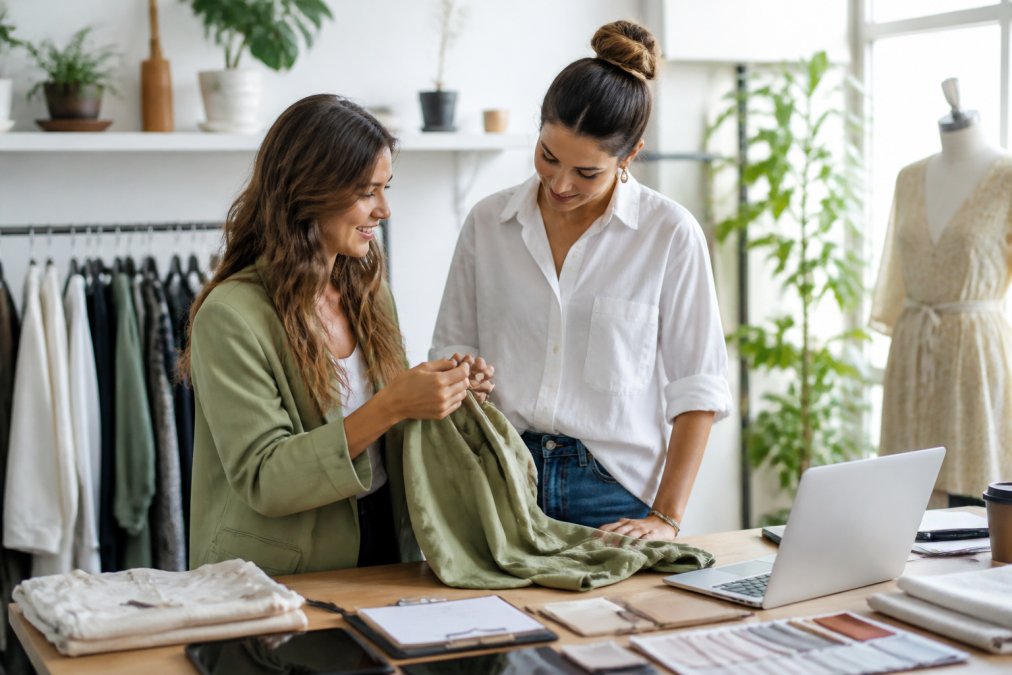
That management load is where most small brands stumble. One or two partnerships are easy to track in a spreadsheet. Fifteen, across three product drops and two platforms, is not.
Start with a budget band you can repeat monthly rather than a one-off splash. Many brands find that a consistent, modest spend across several creators beats a single expensive campaign, because the audience sees your name repeatedly instead of once.
A practical structure looks like this:
- Gifting only: send product, no fee. Best for nano creators building a portfolio.
- Gifting plus a small fee: covers the creator's time and improves response rates.
- Affiliate commission: pay a percentage of sales driven by a unique code or link.
- Retainer: a fixed monthly fee for a set number of posts. Suits your best-performing creators.
How to Find and Vet Micro-Influencers
Start where your customers already are. Search Instagram and TikTok for hashtags tied to your niche, then look at who is posting, not just who has the biggest numbers. A creator with a small but vocal comment section is worth more than one with a large, silent following.
Vetting is where you protect your budget. A few checks catch most problems:
- Ask for a screenshot of audience insights, not just follower count
- Check the ratio of comments to likes; a healthy account has real conversation
- Read the comments themselves and look for generic praise from suspicious accounts
- Scan the last ten posts for engagement consistency, not one viral spike
- Confirm the creator's audience location matches your target market
- Ask whether they have worked with a brand in your category before
A common mistake is treating follower count as the headline metric. It isn't. Engagement rate and audience fit tell you far more about whether a partnership will sell product.
Outreach That Gets Replies: Influencer Outreach Email Templates for Fashion
Influencer outreach email templates for fashion work best when they are short, specific, and show you have actually looked at the creator's page. Generic copy-paste pitches get deleted. A three-line message that names a specific post and explains why you thought of them gets a reply.
The structure that performs consistently has four parts: a genuine, specific compliment; a one-line description of your brand; a clear, simple ask; and a low-friction next step.
Here is a template you can adapt:
Subject: Loved your styling of the linen co-ord
Hi [Name],
Your recent post styling the [specific item] caught my eye, the way you paired it with [detail] was exactly the energy we're building around at [Brand].
We're a small [category] label based in [location], and I think your audience would genuinely like what we make. We'd love to send you [product] to try, with no obligation to post.
If you're interested, just reply with your address and I'll get it shipped this week.
[Your name]
The "no obligation" line matters. It lowers the perceived pressure and, in practice, most creators who accept a gift do post about it.
ASA Influencer Disclosure Guidelines UK: Staying Compliant
The ASA influencer disclosure guidelines UK require that any paid or incentivised partnership is clearly labelled as an advert, and the label must be obvious before a follower engages with the content (Recognising ads: Social media and influencer marketing - ASA). The Advertising Standards Authority enforces this, and the responsibility sits with both the brand and the creator. The ASA's influencer advertising guidance sets out exactly what counts as adequate disclosure.
The rules are simpler than they look. If you paid, gifted, or otherwise incentivised the post, it needs a label. "Ad", "Advert", or "Paid partnership with [Brand]" all work. Vague hashtags like "#collab" or "#sp" do not, because a typical follower does not understand them.
The label must be visible without clicking "read more" (Recognising ads: Social media and influencer marketing - ASA). Burying a disclosure in a wall of hashtags is a common failure and one the ASA has repeatedly ruled against.
For a small brand, the practical step is to put disclosure in the brief. Tell the creator exactly what label to use and where to place it, and check the draft before it goes live. It protects the creator, protects you, and it takes two minutes.
How to Measure Influencer Marketing ROI
Influencer marketing ROI is the return you get from a partnership measured against what you spent on it, and the honest answer for most small brands is that it takes a couple of campaigns before the numbers mean anything. Early partnerships teach you which creators convert; later ones cash in on that knowledge.
Track the basics first: unique discount codes, tracked links, and saves. Then layer in the softer signals that predict repeat business.
Metrics That Matter for Small Fashion Brands
The metrics that matter most are the ones tied to revenue and repeat purchase, not vanity numbers. A post with modest likes that drives twenty sales is a better result than a viral post that drives none.
| Metric | What it tells you | How to track it |
|---|---|---|
| Unique discount code use | Direct sales from a creator | Code redemptions at checkout |
| Tracked link clicks | Interest before purchase | UTM links in your analytics |
| Engagement rate | Audience quality | Likes and comments vs followers |
| Saves and shares | Purchase intent | Platform native insights |
| Repeat purchase rate | Long-term value | Customer records by source |
| Cost per acquisition | Efficiency of spend | Total spend divided by sales |
A common mistake is judging a partnership on the first 48 hours. Fashion has a longer consideration window than most categories, and a post can keep driving sales for weeks as the algorithm resurfaces it.
The hard part of influencer marketing for small fashion brands isn't finding creators. It's keeping track of who you pitched, who replied, what you agreed, and what it delivered, across every platform and every product drop. That's exactly the problem DG Digital Marketing was built to solve. We're a boutique influencer marketing agency that helps brands overcome the challenge of establishing a strong online presence and connecting with authentic creators. Our service empowers marketing teams and solo entrepreneurs to streamline their influencer outreach and campaign management, giving you one central place to organise, track, and share your campaign work, including pitch links and performance data. By partnering with us, clients achieve measurable results, enhanced brand visibility, and genuine engagement within their target markets. Get started with DG Digital Marketing and turn scattered outreach into a creator programme you can actually measure.
Frequently Asked Questions
How do small fashion brands find the right influencers?
Start by searching Instagram and TikTok for hashtags relevant to your niche, then look at who your existing customers follow. Check engagement rates (comments and saves, not just likes) to spot real audiences. Micro-influencers with 5,000 to 50,000 followers often deliver better results for small brands because their audiences trust them. Tools like DG Digital Marketing can help you organise your shortlist and track outreach in one place.
Is influencer marketing effective for new fashion labels?
Yes, when you focus on micro-influencers and clear briefs. New labels benefit from the trust and social proof that creators bring. Start with a small pilot of three to five influencers, measure engagement and sales, then scale what works. Avoid spreading your budget too thin across many creators before you know your numbers.
How much should a small fashion brand pay influencers?
Pricing depends on the influencer's reach, engagement, and the deliverables you need. Many micro-influencers accept gifted products or a small fee, while larger creators charge more. There is no fixed rate. For a tailored quote based on your campaign goals, contact DG Digital Marketing directly.
What are the legal requirements for fashion influencer disclosures in the UK?
UK influencers must clearly disclose any paid or gifted partnership. The ASA (Advertising Standards Authority) requires labels like #ad or #sponsored to be upfront and unambiguous. As a brand, you should include disclosure requirements in your contract and brief. This protects both you and the creator from breaking advertising rules.